

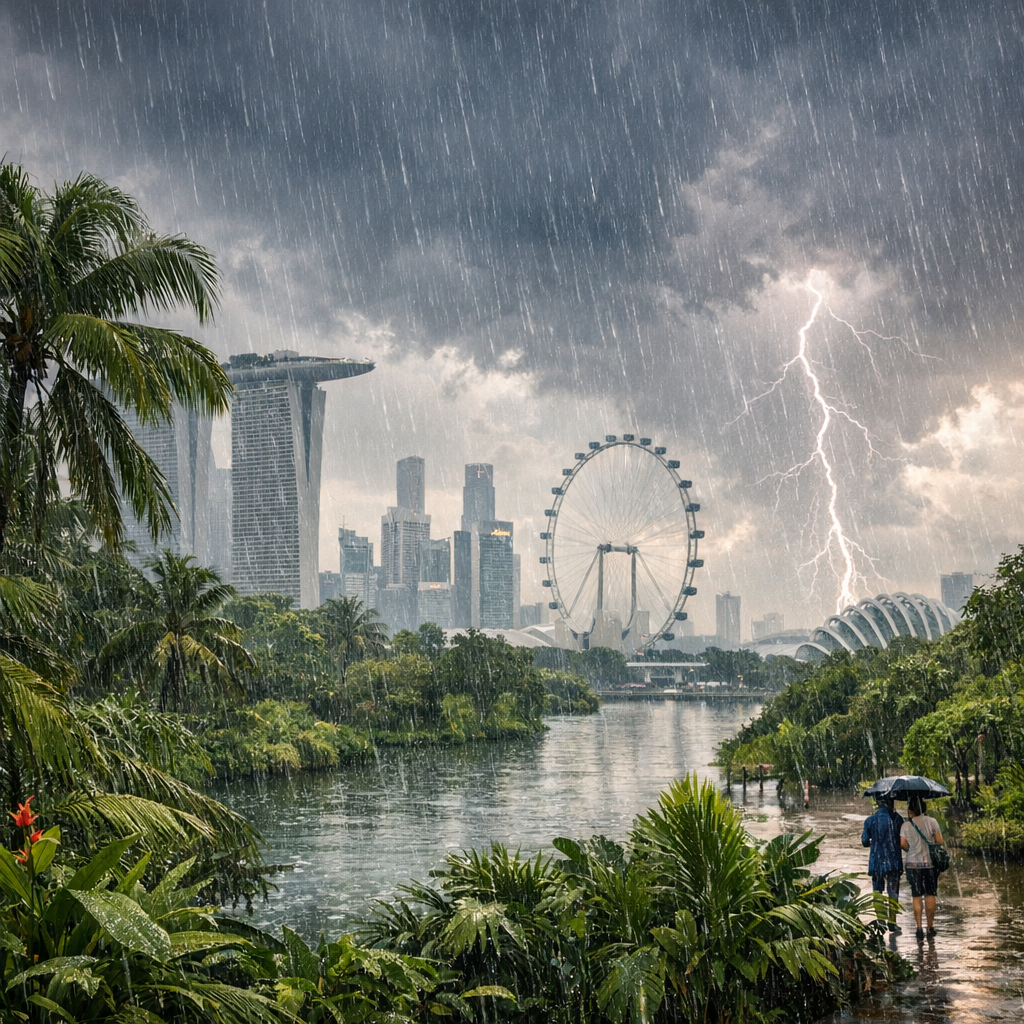
Singapore’s geographical position near the equator endows it with a tropical climate characterized by high temperatures, abundant rainfall, and consistent humidity throughout the year. Unlike temperate regions, Singapore does not experience the traditional four seasons but instead has distinct monsoon periods.
Monsoon Seasons
Singapore’s climate is primarily influenced by two monsoon seasons:
Northeast Monsoon (December to early March)
This season is divided into two phases:
- Wet Phase (December to early January): Characterized by monsoon surges that bring widespread, continuous moderate to heavy rainfall, often accompanied by winds of 25-35 km/h.
- Dry Phase (Late January to early March): Marked by relatively dry and windy conditions.
Southwest Monsoon (June to September)
During this period, Singapore experiences:
- Sumatra Squalls: Organized lines of thunderstorms that develop over Sumatra or the Straits of Malacca and move eastward, bringing gusty winds and heavy rain, typically occurring between predawn hours and midday.
- Afternoon Showers: Short-duration showers or thunderstorms in the afternoon are common.
Inter-Monsoon Periods
Between the monsoon seasons, Singapore undergoes inter-monsoon periods (late March to May and October to November) characterized by light and variable winds. These periods often see intense afternoon and early evening thunderstorms due to strong surface heating and sea breeze interactions.
Climate Change and Its Impact
In recent decades, Singapore has observed significant climatic changes. From 1984 to 2022, the annual mean temperature rose by 0.24°C per decade. Notably, 2024 was one of the warmest years on record, with an annual mean temperature of 28.4°C. Additionally, annual rainfall has been increasing at a rate of 83 mm per decade from 1980 to 2022. These changes pose challenges such as rising sea levels, increased frequency of extreme weather events, and impacts on biodiversity and public health.
Environmental Challenges
Singapore faces several environmental issues, including deforestation, water pollution, and urban heat island effects. Rapid urbanization has led to the loss of natural habitats, affecting biodiversity. Efforts like the Singapore Green Plan aim to address these challenges through sustainable development and environmental conservation initiatives.
Understanding Singapore’s unique climate and the environmental challenges it faces is crucial for developing effective strategies to mitigate the impacts of climate change and ensure a sustainable future for the nation.